
Finding new ways to communicate
“For Matthew, communication support has never been about replacing speech. Instead, it has been about strengthening it.”
Matthew Deane has always loved to chat. With support from his mum Helen, speech therapist Cathy and support worker Penny, he is using AAC technology and creative expression to strengthen his communication and build independence.
Matthew prefers to communicate using his voice, but lately he has also been learning to use TD Snap, an app that enables clearer communication.
“He likes to chat,” says Matthew’s speech pathologist Cathy, who has worked with him for several years. “But he has a condition called cluttering, which can make his speech difficult to understand. That is where this app is very helpful.”
While research into cluttering is limited, Cathy explains that it is generally considered a language disorder where words become rushed or scrambled.
TD Snap is an AAC (augmentative and alternative communication) app developed by Tobii Dynavox. Matthew uses it alongside verbal speech to help organise language, slow his speaking rate and communicate more clearly.
“Matthew has spent his entire life using his voice,” Cathy says. “He still likes to use his voice, but TD Snap gives him another way to support that communication.”
The app works through colour-coded language systems and categories that help users build complete sentences. It also provides visual prompts that reinforce spoken language.
Support worker Penny says it has been especially useful for helping Matthew include smaller connecting words that are often missed in speech.
“He might say, ‘We shopping’, and the device helps pick up the middle words that make the sentence more understandable,” she says.
Matthew has been using TD Snap for several years and uses it in different ways depending on the situation. Sometimes it helps him order food or communicate while shopping. Other times it becomes part of larger learning activities.
Using another app called Book Creator, Matthew and Penny have created step-by-step cooking guides and digital travel stories together.
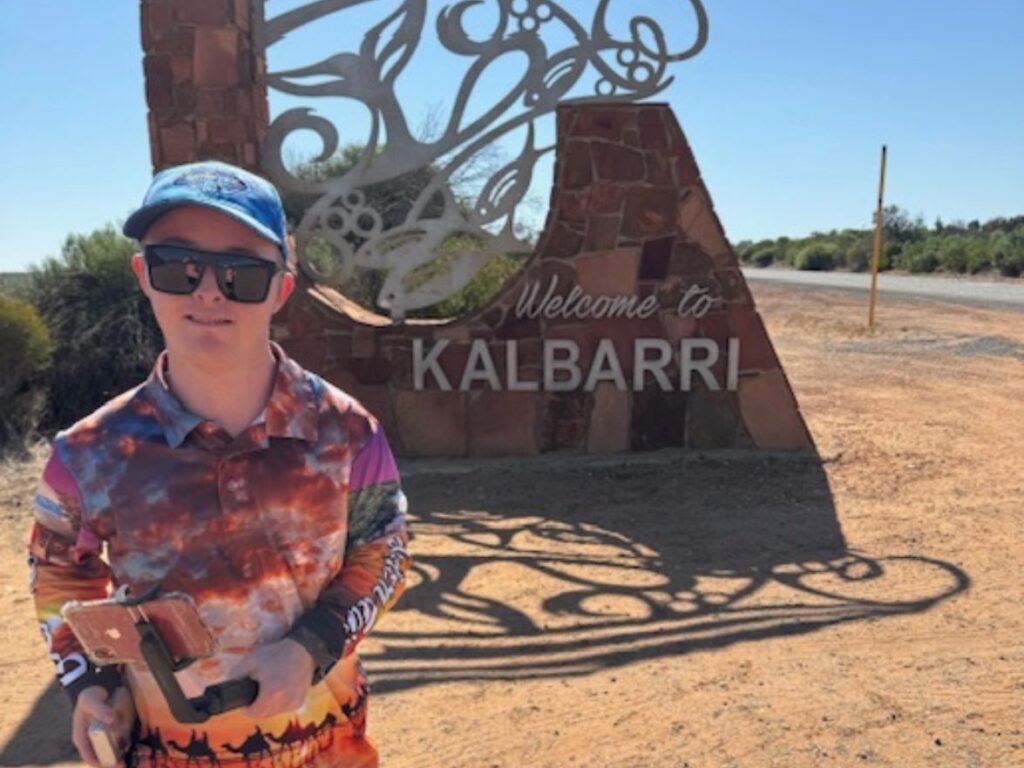
One project includes a recipe for a “1:1:1:1 cake”, while another documents a trip around Western Australia featuring dolphins, snakes and, according to Matthew, “too many flies”.
The technology has become an important tool in helping Matthew advocate for himself and communicate personal boundaries.
Cathy explains that Matthew has historically been very compliant and eager to please others, which sometimes made it difficult for people to recognise when he was uncomfortable or wanted to say no.
“Matthew’s not really loud and out there with his no,” she says. “He’s a little bit subtle about it, and you really have to be attentive.”
To support this, Matthew and his team have been using the SoSAFE program, a resource designed for people with intellectual disability that teaches social relationships and personal boundaries in a clear and structured way.
Helen explains that the program uses photos of family members, friends, support workers and strangers to help people explore different kinds of interactions and what constitutes appropriate behaviour.
“It teaches the type and degree of verbal and physical intimacy appropriate with different categories of people,” she says.
One particularly successful strategy has been teaching alternatives to physical affection, such as offering a high five instead of a hug.
Outside communication work, Matthew is also a performer through Crossroad Arts, where he plays a character called Dr DK in the annual performance Loose Ends. The character – named after tooth decay – has become a favourite role.
“I love Dr DK,” Matthew says.
The performances have even incorporated Matthew’s communication device into the script, creating another space where technology, creativity and self-expression come together.
0 Comments