
Down Syndrome Australia’s Annual Report 2025-26
This year’s Annual Report shows how Down Syndrome Australia worked towards the three goals in our Strategic Framework 2025 to 2028.
It starts with a short video of the year’s highlights. You can then read about our projects under each goal and see our financial report.
Use the menu to jump to any section.
Year in highlights
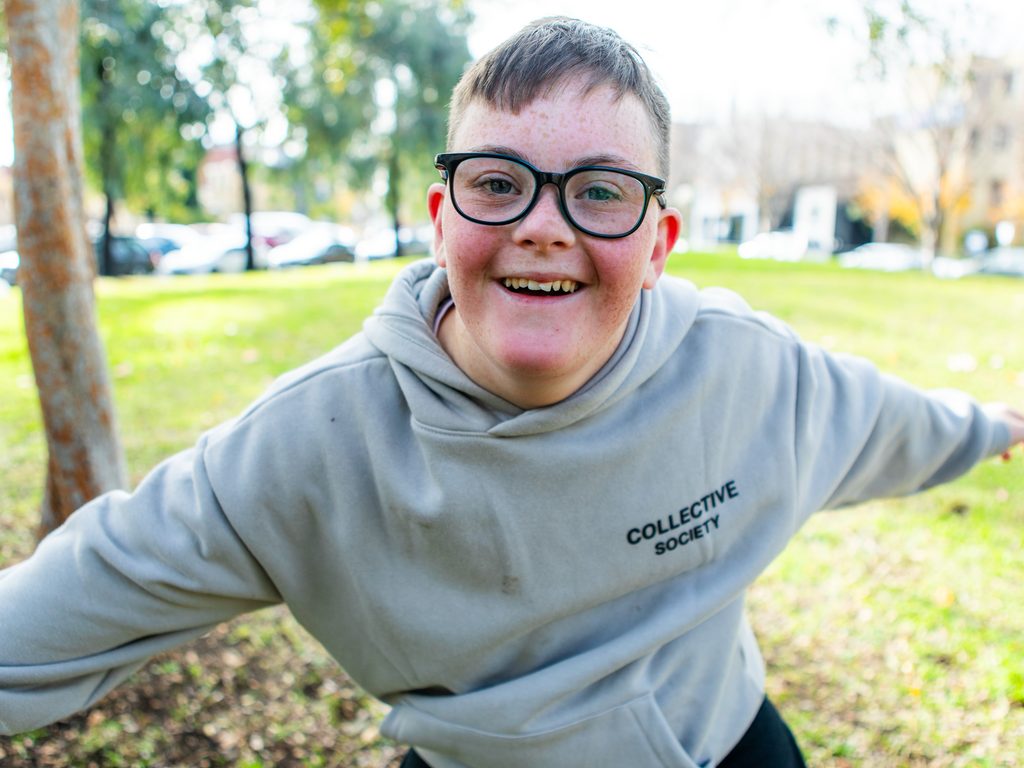
Watch highlights from our year with the Down syndrome community.
About us
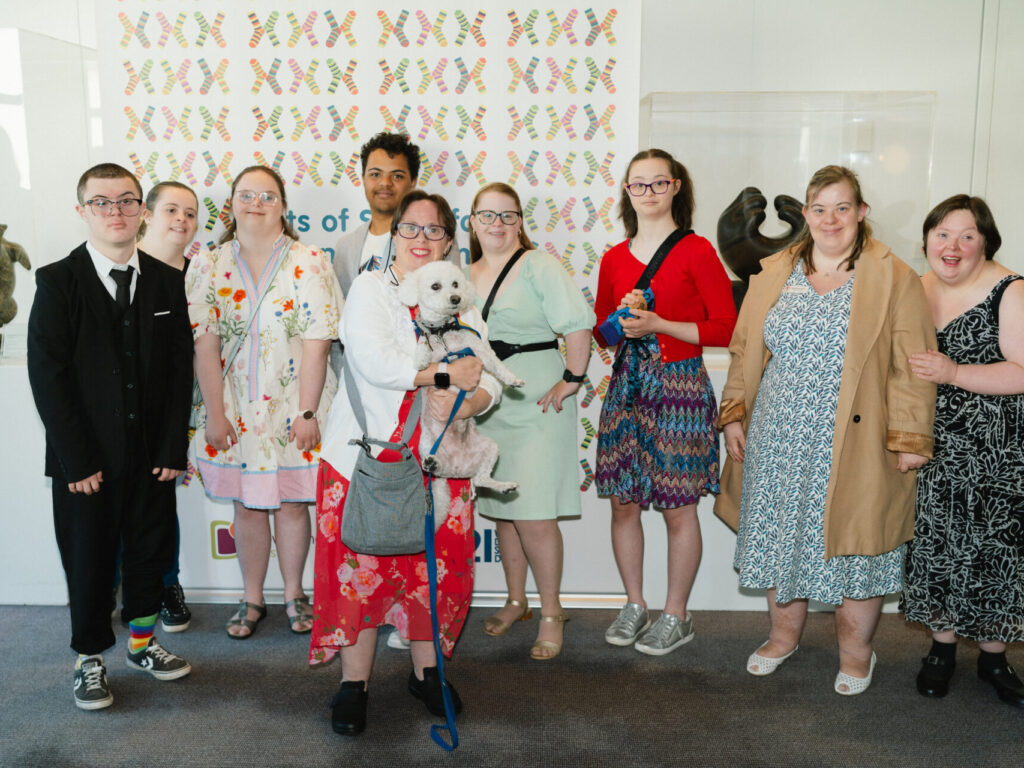
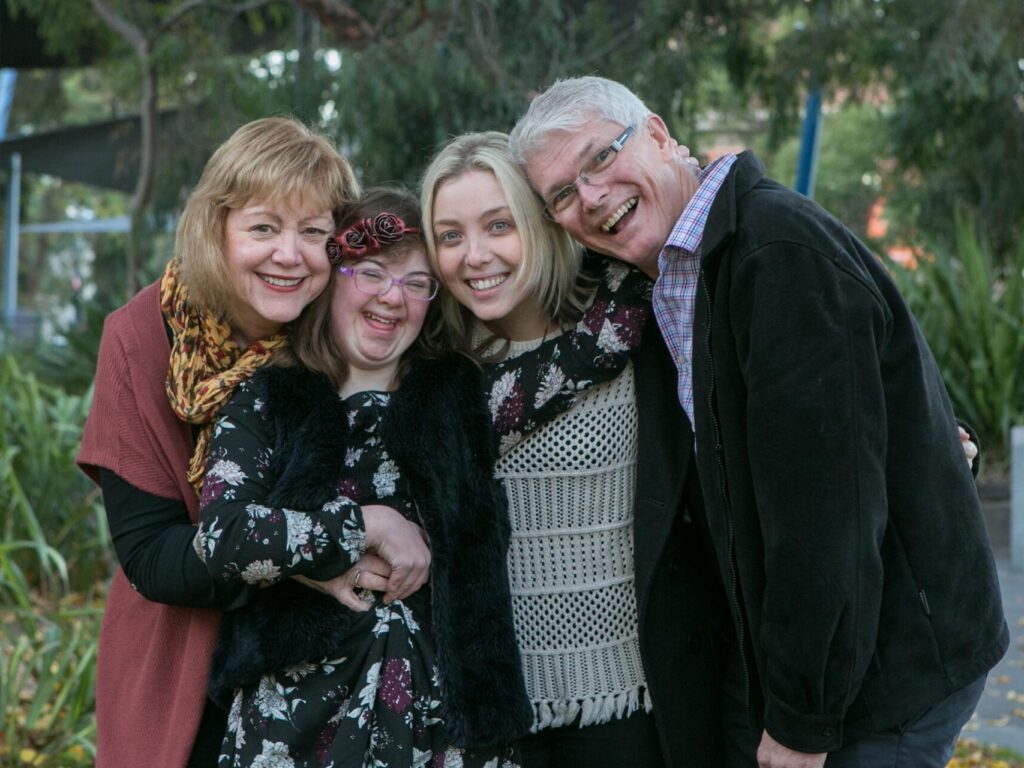
Down Syndrome Australia (DSA) is the national organisation for people with Down syndrome and their families. People with Down syndrome help lead our work. We want a world where people with Down syndrome are included, accepted and treated fairly.
We also lead the Down Syndrome Australia Consortium, a Disability Representative Organisation. We advocate for the human rights and a good life of people with intellectual disability caused by chromosomal variation.
Strategic Framework 2025 to 2028
Our Goals
We are guided by our Strategic Framework 2025 to 2028 and it’s three goals.
Goal 1
We will make life good for people with Down syndrome

156
people placed in open employment
40,639
views of the Right to Work website
1,327
views of our health screening tool
211
downloads of the Supporting My Rights app
Employment Connections
The Employment Connections Service supported 156 people with disability into open employment across Australia, including four people who transitioned from Australian Disability Enterprises. We exceeded our placement target, achieved all project goals and celebrated our first regional placement in South Australia. We also commissioned Swinburne University to assess the service’s delivery model, costs and financial sustainability, including how Commonwealth funding could support it.
Employment Ambassadors
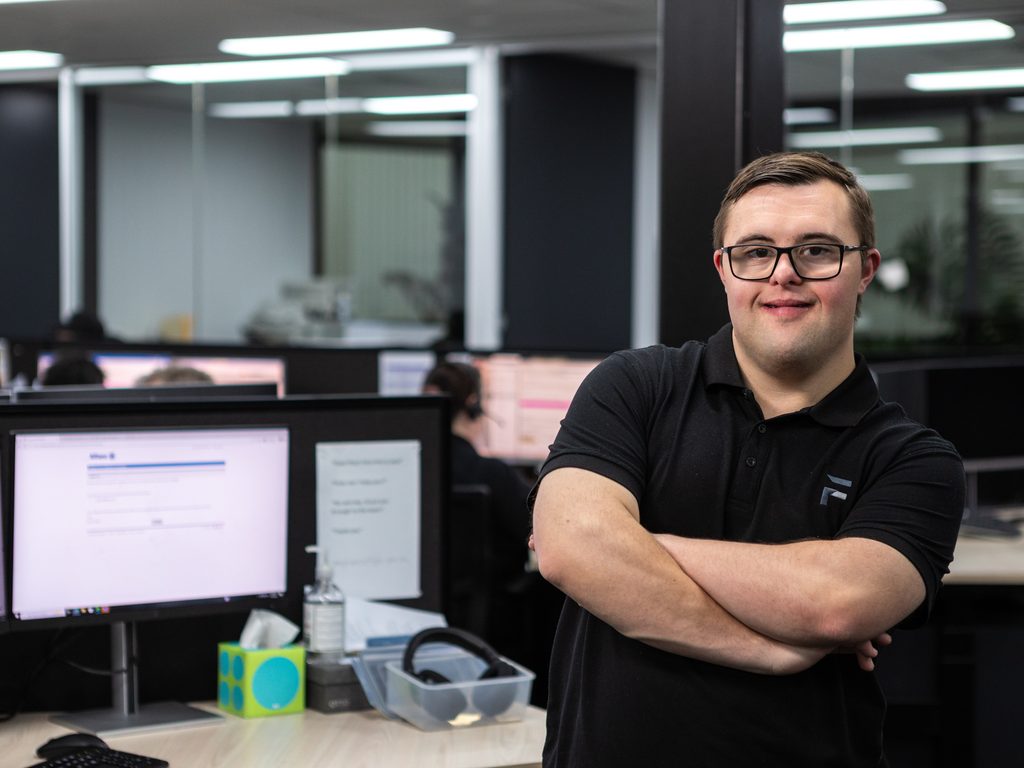
Employment Ambassadors helped improve employer understanding and inclusion of people with Down syndrome. They co-designed and delivered Hiring a Person with Down Syndrome, a training program that challenges myths and supports inclusive employment practices. Ambassadors also led workplace training, contributed to national resources, supported the New South Wales employment pilot, and represented Employment Connections at major national and international events, including the United Nations in New York.
Complete the Hiring a Person with Down Syndrome online course
Right to Work
Since the November 2025 relaunch, the Right to Work website has had more than 40,000 views. We published five new employment success stories and filmed two more, in Victoria and Tasmania. Annalise’s story reached more than 22,900 views on Instagram and was chosen for International Day of People with Disability.
Employment advocacy
We contributed to national processes for the transition to of Inclusive Employment Australia, the new program for supporting people with disability to find employment. We continued to advocate for people with Down syndrome and other disability, especially people with high and complex support needs. We advocated for fair wages for people with Down syndrome, and to improve the Disability Support Pension.
Health Ambassadors
Health Ambassadors with Down syndrome delivered training to health professionals and students and helped develop accessible health resources. Their work is improving communication and healthcare for people with intellectual disability. Charles Darwin University requested additional training following a presentation and the World Health Organization has expressed interest in exploring the model internationally. ABC’s 7.30 also featured Health Ambassador Emily, highlighting how the program centres people with intellectual disability as experts in improving inclusive, accessible healthcare.
Watch the ABC’s 7.30 story featuring Health Ambassador Emily
Ageing Well
Our Ageing Well resources made information about growing older available in Plain English and Easy Read. They covered dementia, menopause, grief and loss, anxiety and depression, and keeping the body healthy. We also made a video, and our Project Officer Rohan led an inclusive language workshop for nib staff.
Watch our Perspectives on ageing well with Down syndrome video
National Centre of Excellence in Intellectual Disability Health (the Centre)
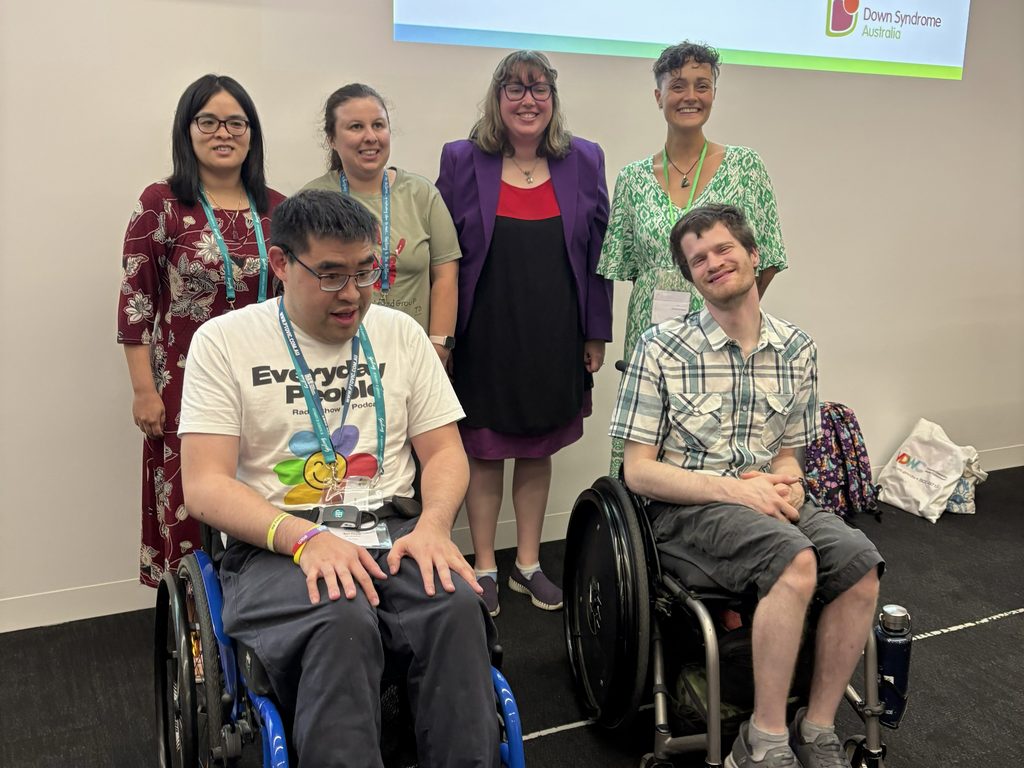
We continued our role as a Consortium member of the Centre. People with lived experience helped shape the National Centre of Excellence in Intellectual Disability Health’s podcasts and webinars for health professionals. We presented at Australia’s Disability Strategy Forum about our work and the Learn and Lead Group. We continued our role on the Centre’s steering committee, developing advocacy priorities and contributing to submissions on health outcomes, data and supports for people with Down syndrome.
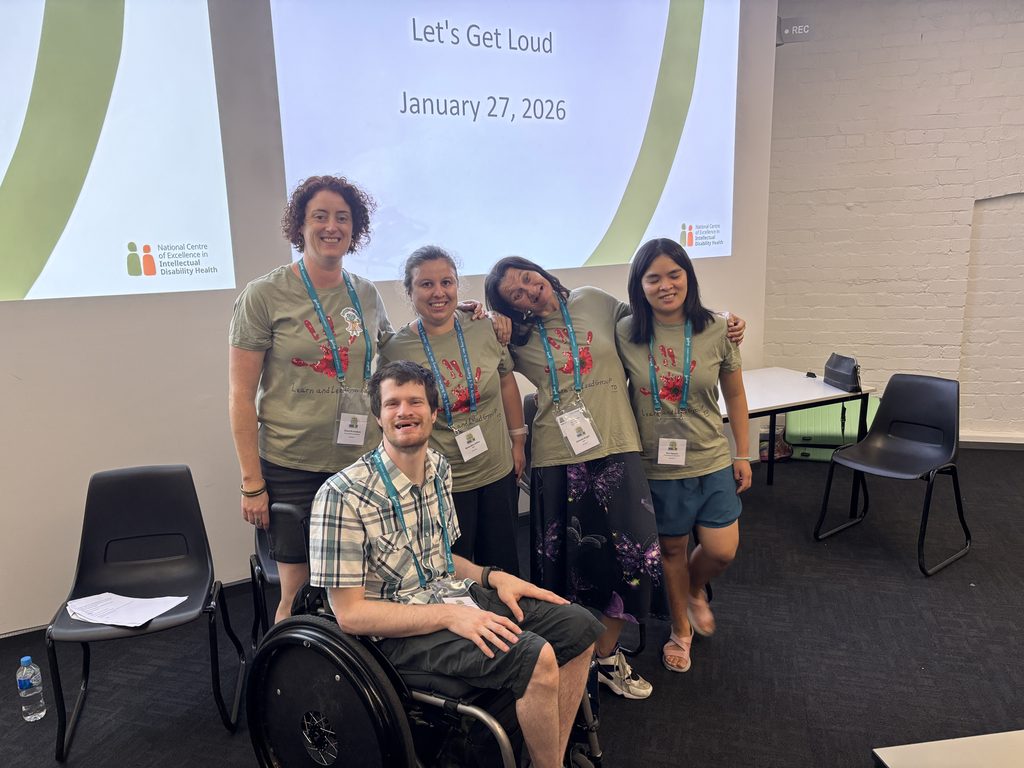
The Learn and Lead Group brings together 10 people with intellectual disability who advise the Centre. This year, a member with Down syndrome from regional Queensland joined the group, bringing valuable insight into regional healthcare experiences. They also created and presented the Let’s Get Loud workshop at two conferences.
“Other people’s perceptions of me and disability really affected me the most. It really affected my confidence, my self-esteem and mental health. Being part of the Learn and Lead Group has given me a quiet confidence and given me opportunities to contribute to be better everyday.” Learn and Lead Group member
Supporting My Rights
We launched the Supporting My Rights app and resources, co-designed with people with intellectual disability. The app helps people build the knowledge, confidence and skills to understand and exercise their rights when using NDIS services and supports, while helping providers better support NDIS participants. Everyone involved in the co-design process described it as inclusive, safe, respectful and productive.
Accessible Communications
Our Expert Review Panel included five people with intellectual disability, including two with Down syndrome. They reviewed five documents from the NDIA and gave honest, detailed feedback to improve clarity, accessibility and usability. Panel members also grew in confidence through the process.
NDIS Advocacy
We had a sustained campaign of advocacy with politicians and public servants in relation to the NDIS Reforms. This advocacy helped get changes made to the reforms. We also pushed for stronger safeguards for people with high and complex support needs, and made submissions to government on the things that are needed to support people with Down syndrome.
Goal 2
We will support the Down syndrome community to work together and grow
8
members of our Down Syndrome Advisory Network
2
roles with Down Syndrome International
2,279
information and support sessions
402,416
website views
Down Syndrome Advisory Network (DSAN)
Throughout the year, DSAN members provided advice to DSA on advocacy, communications and strategic priorities. Their input helped shape DSA’s work and ensured the perspectives of people with Down syndrome informed our decisions and advocacy. Claire Mitchell, a former member who now sits on our Board, taught members how to be a good leader. This peer-to-peer learning demonstrated leadership pathways for people with Down syndrome interested in leadership and advocacy.
Watch DSAN’s International Day of People with Disability video
Lived experience advocacy
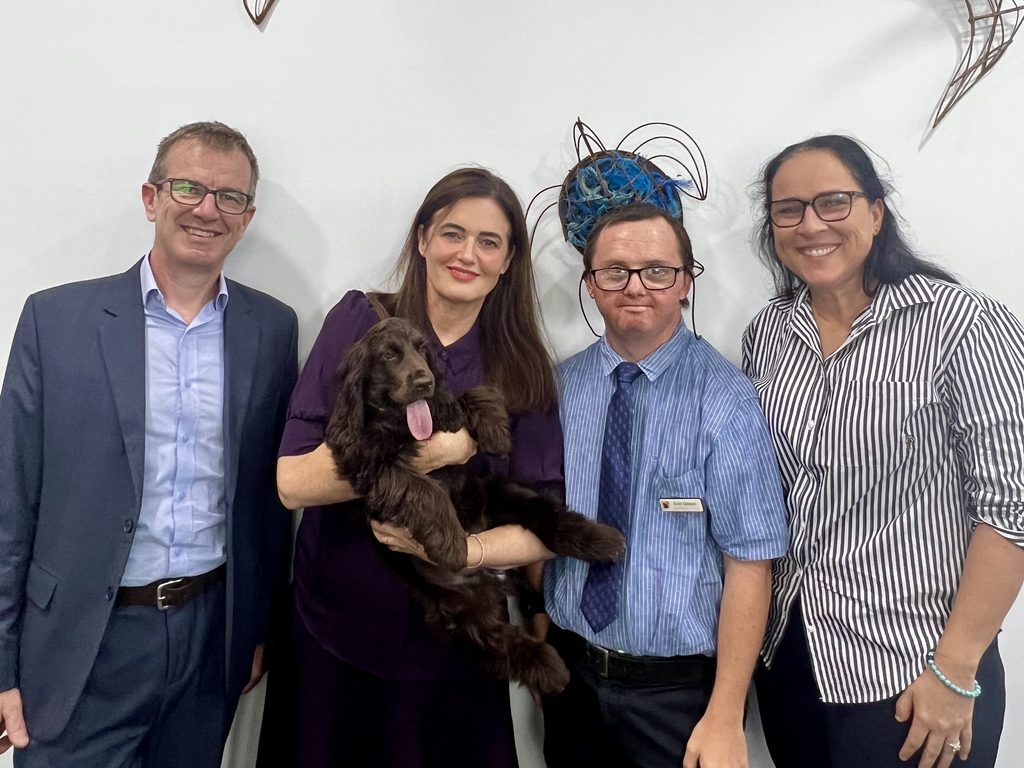
People with Down syndrome helped lead our advocacy. Employment Ambassador Eoin met with Ali France MP and Henry Pike MP, while Board Member Claire met with Minister Jenny McAllister.
DSAN also reviewed our Employment position statement and contributed to Education and Health position statements that are still being developed.
Down Syndrome International
We appointed Chris Bunton and Eoin Gibson to represent DSA internationally. Chris attends quarterly meetings of Down Syndrome International’s Self Advocacy Group Network, where members share ideas, experiences and challenges. Eoin attends monthly Ambassador Program meetings. Both made international connections and contributed feedback on global issues affecting people with Down syndrome.
“I love talking about being an Ambassador because I love helping people.” Eoin, Down Syndrome International Ambassador
Peer Network Group
We established our first Peer Network Group for current and former staff with Down syndrome and intellectual disability. The group has 24 members, half with Down syndrome, who receive updates and opportunities to stay involved. Since starting, members have met online twice to connect and stay involved with DSA. The group will meet four times each year.
Scrapheap Adventure Ride
Founder Perry Gilsenan started the volunteer-run Scrapheap Adventure Ride 16 years ago in honour of his daughter Grace who was born with Down syndrome, creating a lasting connection with the community. Perry’s leadership makes the annual event possible, and it has raised over $1.3 million. This year, volunteer “Scrappers” rode to Lake Cargelligo and raised more than $100,000 for projects that support people with Down syndrome in regional and remote communities.
Skills for Life
We created a National Steering Committee and ran 32 activities across seven states and territories, involving 391 people with Down syndrome. Designed with the community, Skills for Life provided online and face-to-face peer support that built skills, confidence and independence. People with Down syndrome helped develop resources, give presentations and host events, while the state and territory organisations worked collaboratively to deliver the program.
Working together across Australia
We continued to work with our member and partner organisations across Australia delivering on projects, working together on advocacy and collaborating through the Australian Down Syndrome Alliance. We also welcomed the establishment of Down Syndrome Community South Australia and look forward to continuing to work with them.
Information for Life
Working with the state and territory organisations, Information for Life provided nationally consistent, accessible information, support and referrals through trusted local organisations. The National Resources Group worked together to update and develop resources for people with Down syndrome, their families and supporters. The National Resource Hub ensures support is provided to regional, remote and diverse communities.
Voice
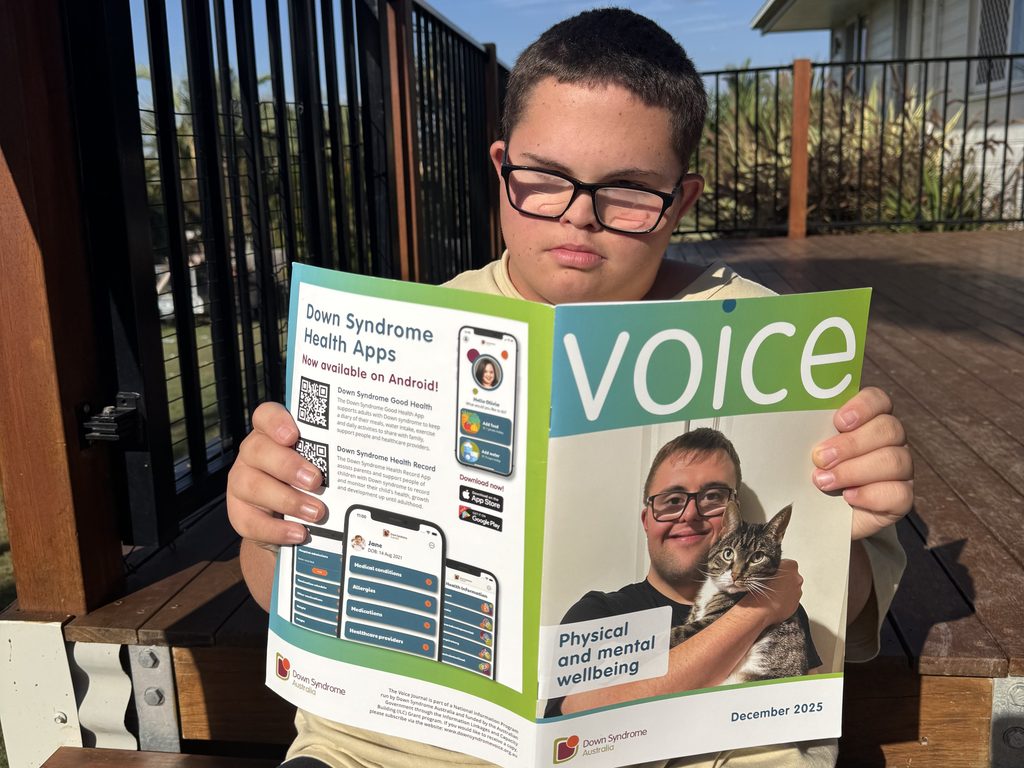
Voice successfully transitioned to a paid subscription model and published two editions, Speaking Out and Physical and Mental Wellbeing.
The Editorial Committee and DSAN helped choose topics and stories, while Project Officer Alanna helped develop more Easy Read content. Voice continues to give people with Down syndrome a platform to share their lived experience and help connect our community across Australia.
Goal 3
We will help other people to respect and include people with Down syndrome
158,934
views of World Down Syndrome Day content
12
submissions advocating for better supports for people with Down syndrome

700+
people at the Inclusion International Congress

1,000+
people attended a conference where our Employment Ambassadors presented
World Down Syndrome Day
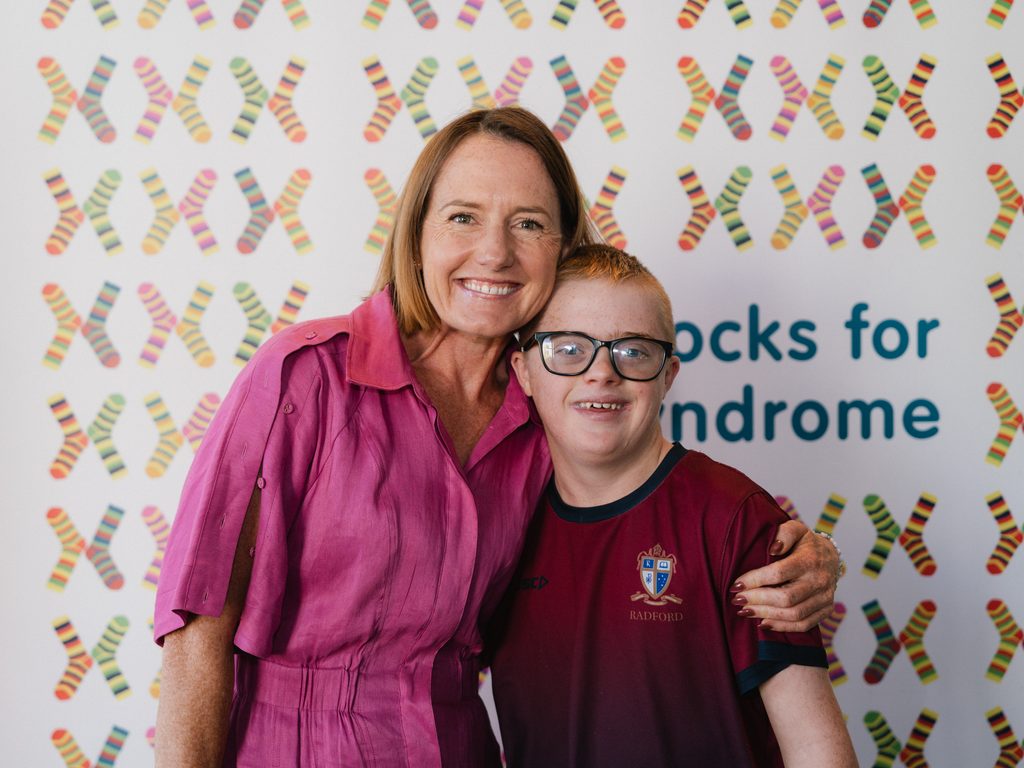
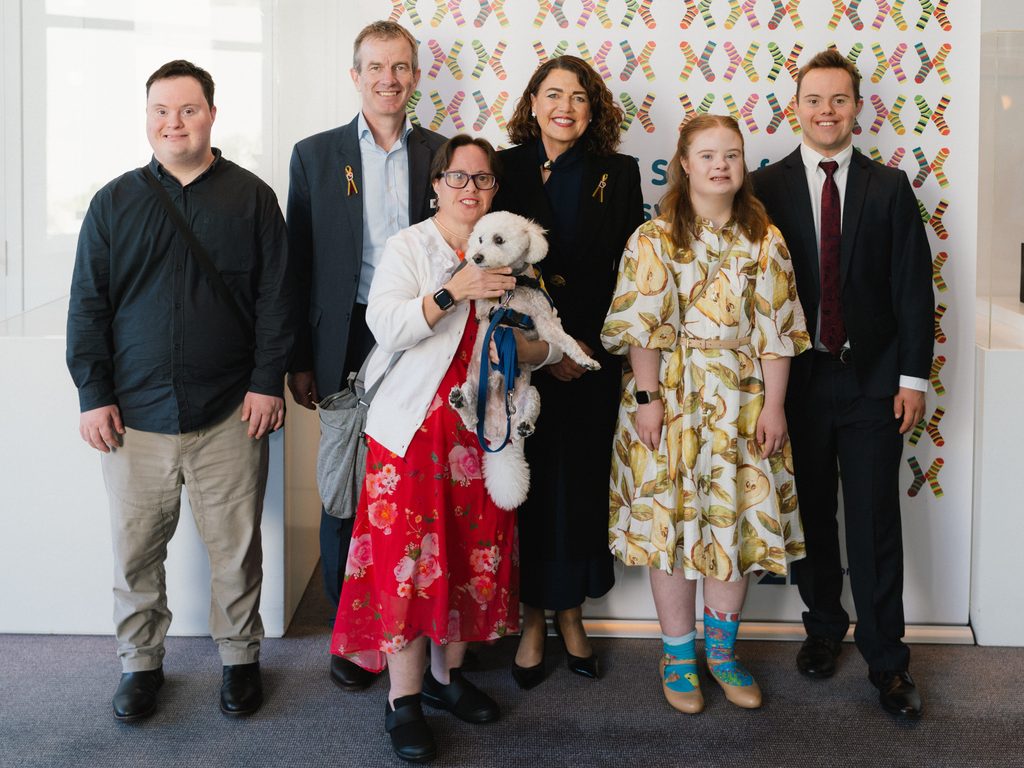
World Down Syndrome Day is celebrated globally on 21 March to recognise the lives, achievements and rights of people with Down syndrome. We hosted an event at Parliament House in Canberra that brought together our community, partners, supporters and parliamentarians. People with Down syndrome and their families spoke directly with parliamentarians, while Annie and Matt shared what connection and belonging mean to them. DSAN also contributed feedback on the international theme, Together Against Loneliness. The event had an excellent turnout, and our World Down Syndrome Day content had 158,934 views and 10,028 engagements.
Down Syndrome Awareness Month
Every October, we celebrate people with Down syndrome and share their knowledge, skills, experiences and contributions. Eight DSAN members spoke directly to the community through four videos, which had more than 47,000 views and helped their messages reach a wide audience across Australia. The campaign increased visibility of people with Down syndrome and created opportunities for their voices, experiences and achievements to be heard.
Digital Champions
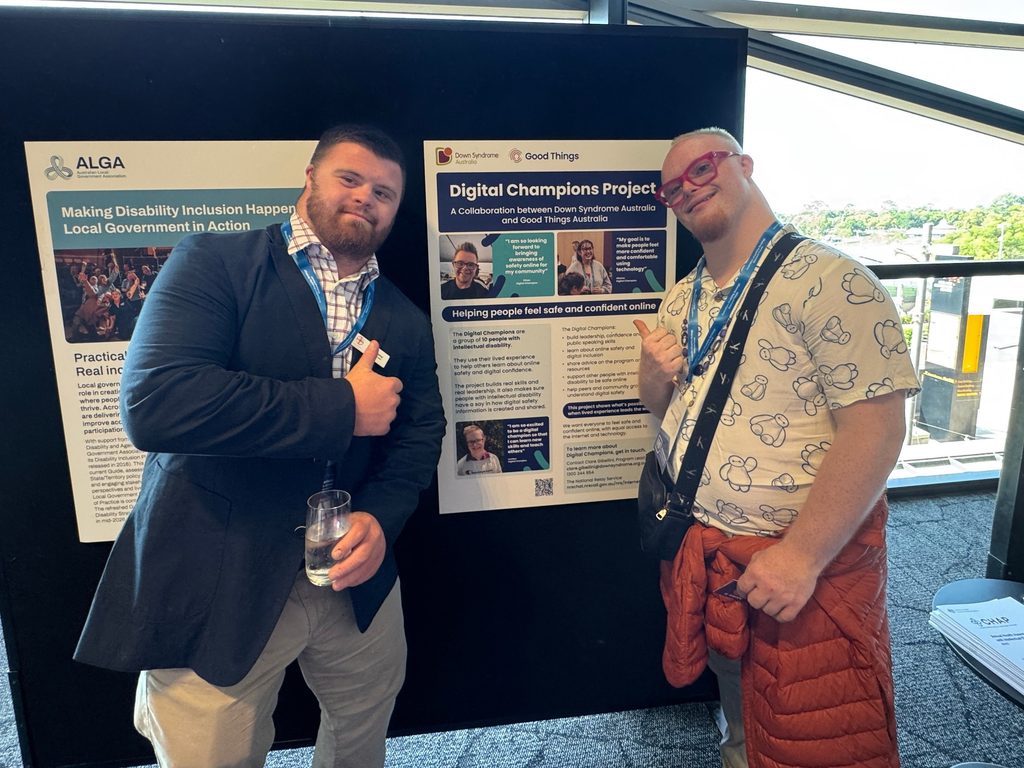
Ten Digital Champions with intellectual disability co-designed an online safety resource and presented it to the United Nations and the Department of Health Disability and Ageing and the Carers Network. They built skills in co-design, digital safety and presenting, while webinar participants reported greater awareness and confidence online.
“I feel really proud that what we did was at the UN. I like that people from all over the world could see what we do.” Bri, Digital Champion
Inclusion in Action
We co-designed an Inclusive Education webinar grounded in lived experience and in evidence-based practice. It gave teachers, school leaders, support staff, allied professionals and families practical strategies for including students with Down syndrome. Project Officer Lachie also presented to speech pathology students at Charles Darwin University on making their practice more inclusive. After the webinar, Lachie reported a big rise in his confidence at work and now offers to take part in other projects.
Education advocacy
We met decision makers about improving inclusive education. We continued our role on the steering committee of the Australian Coalition for Inclusive Education and contributed to a draft Roadmap to Inclusive Education, which aims to meet the Education recommendations of the Disability Royal Commission.
Learn about the Australian Coalition for Inclusive Education
Inclusion International Congress
We presented alongside colleagues from Down Syndrome International on health equity, speaking about global and local challenges in healthcare and highlighting the work happening in Australia. Alishia shared her experience of the Health Ambassador program, which sparked interest from other countries wanting to set up something similar.
Read our reflections from the Inclusion International Congress
Inclusive Practices
Both directors with Down syndrome, Michael and Claire, joined the Nominations and Governance Committee, bringing valuable perspectives grounded in lived experience. With their guidance, we improved the accessibility of Board meetings and processes and made key governance documents available in plain English. Their active participation ensures lived experience continues to inform our decisions.
Prenatal blueprint
Testing for genetic conditions is now a routine part of pregnancy care, but Australia has no national pathway or consistent standards for testing, communicating results and providing support. This year, we have been working with key stakeholders to develop a prenatal blueprint that will guide a national approach, helping people access the information and support they need to make informed decisions.
Migration
Our Migration Information Service helped people with Down syndrome and their families understand visa requirements and explore pathways for coming to, or staying in, Australia. We continued advocating for a fairer migration system through the Welcoming Disability campaign. This year, we saw some progress in reducing barriers, including changes affecting children born in Australia with disability and more realistic education-cost assessments.
Financials
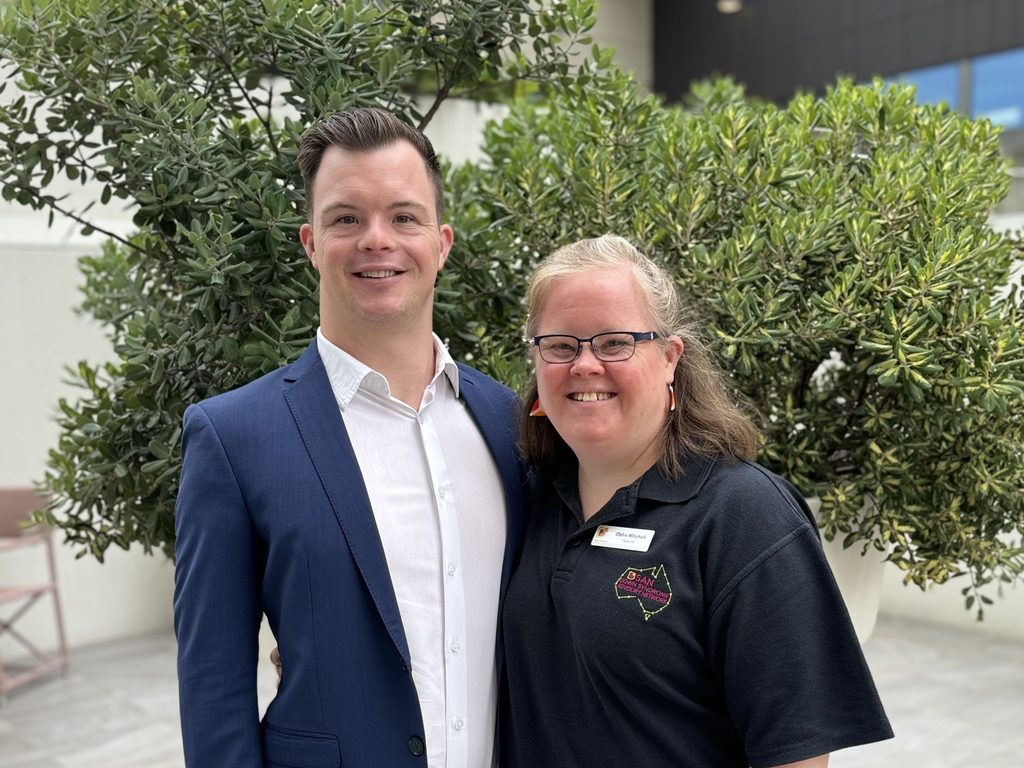
Watch the video below to hear Board member Claire Mitchell talk about our financial performance this year.
Read more in our Financial Report for 2025-26.
Thank you
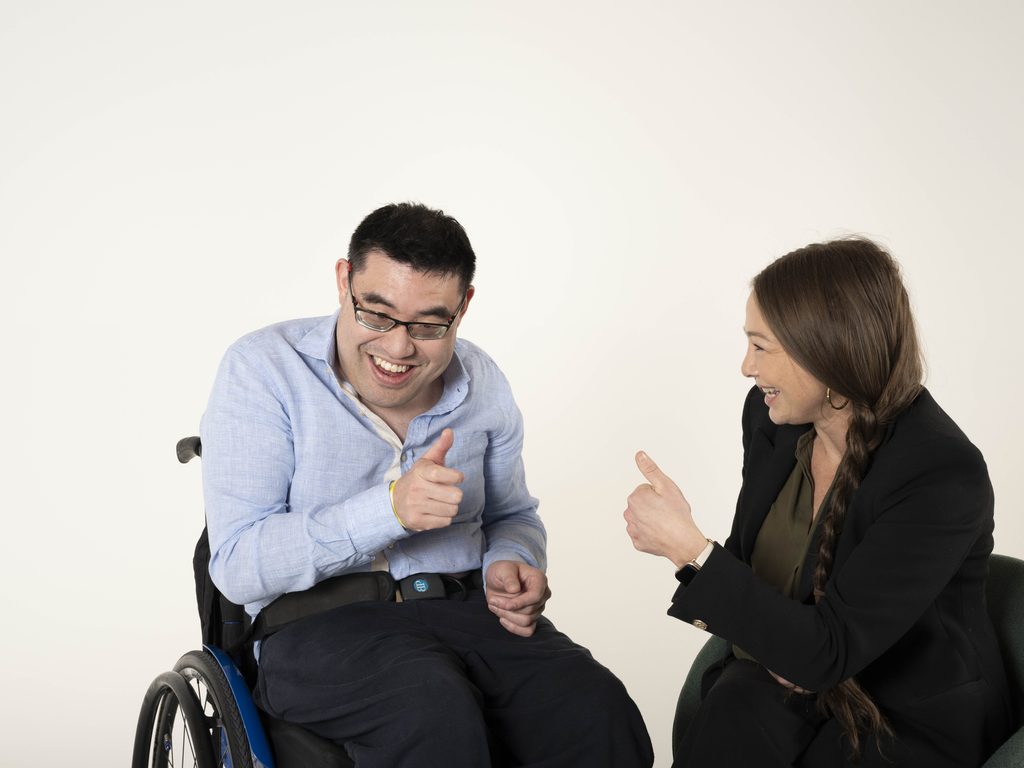
Our work is only possible because of the people and organisations who support it. We thank our funders and partners. Our funders include the Department of Health, Disability and Ageing, nib foundation, the National Disability Insurance Agency, Good Things Foundation, the Sherry Hogan Foundation and our philanthropic funders. This support meant we could launch new resources, run national projects and take people’s voices to government.
Our staff turn funding and partnerships into practical change. This includes our Health and Employment Ambassadors, Digital Champions and Project Officers with Down syndrome, who help lead our work.
We also thank the members of the Australian Down Syndrome Alliance. The Alliance is a voluntary group of Australian Down syndrome organisations who have a collective purpose to lead change through the power of people with Down syndrome and the community.
Because of all of you, we reached more people this year and created real opportunities for people with Down syndrome.
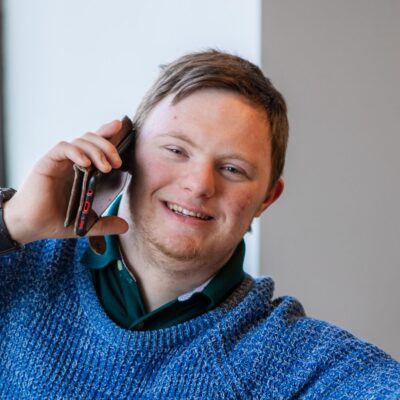
Stay Connected
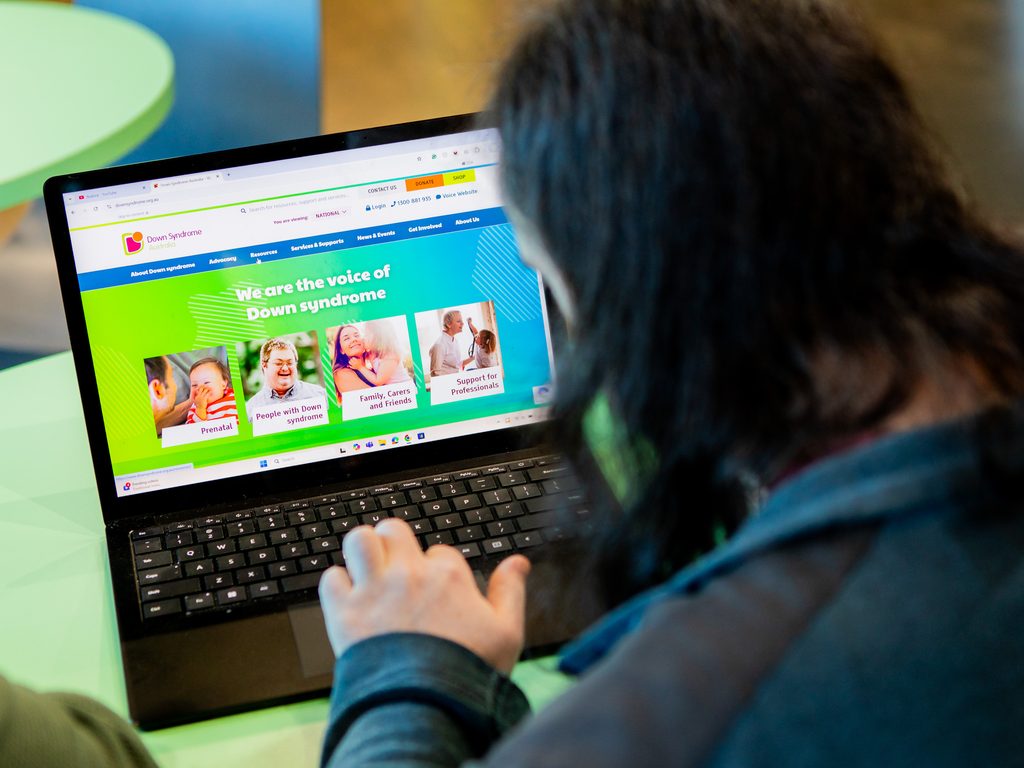
Our work is stronger when the Down syndrome community is part of it.
Stay involved to hear what’s happening, share your ideas and help shape what we do next.
Read Voice
Subscribe to Voice for stories, ideas and experiences from people with Down syndrome, in their own words.
Follow us on social media
Thank you for being part of the journey. We look forward to what we do next, together.